Operational fleet monitoring
We handle the alerts your vehicles send, under the agreed protocol.
Service 04 · Mobility and personal protection
We handle alerts from your fleet and field staff, with an operator on the other end. Our own operators, at the center in the ATG Building, every day of the year.
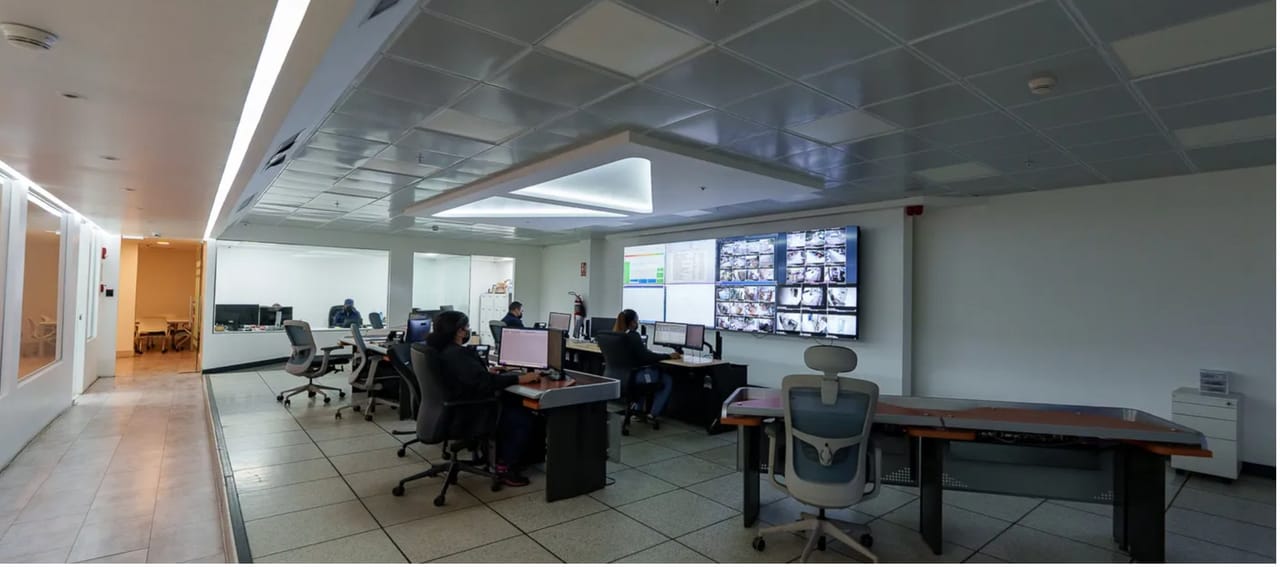 AMS center · 24/7
A center that receives alerts from your vehicles and your field staff and handles them with an operator, day and night.
Companies with fleets, cargo on the road or staff who work alone or travel, and public entities in Panama.
Response under the agreed protocol, notice to your contacts and a log of every step with its time.
What it includes
You choose what your operation needs. Every service is handled from the same center, with the protocol we agree on together.
We handle the alerts your vehicles send, under the agreed protocol.
We follow, from a distance, the cargo and trips you tell us about, and handle their alerts.
We handle alerts from staff who work alone or in the field.
An operator answers the person who asks for help from their device.
We look after your company’s staff when they travel: we handle their alerts and notify whoever your protocol names.
In an emergency, the center coordinates the notices to your contacts and to whoever your protocol names to respond on site.
How it works
This is how the center handles an alert. The exact order of calls and notices is the one in your agreed protocol.
Illustrative example
The center, in numbers
The center has a UPS (backup batteries), a generator and two internet and telephony links from different providers, with operators on every shift.
Who does what
Receiving an alert, notifying, going to the location and maintaining the devices are different commitments. Here is each one.
Who it’s for
Frequently asked questions
The alert reaches the center and an operator handles it: they see who sent it and the information that comes with it, contact the person and act on the agreed protocol. Every step is logged with its time and you receive the report.
AMS’s own operators, at the center in the ATG Building. There are operators on every shift, 24 hours a day, 365 days a year.
Your vehicles or staff need a device or an app that sends alerts to the center. Which ones work for you is defined in the evaluation. If you don’t have them, we look at it with you in the evaluation.
Not unless contracted. The center contacts the person and notifies your contacts and whoever your protocol names. The service does not include on-site personnel.
The center can only handle what the device manages to send. Where there is no signal or the battery is dead, the alert doesn’t arrive, and that situation is not covered by the service.
It depends on the site, the equipment and the protocol. The proposal comes from the evaluation of your site, which is free of charge, and we deliver it in writing.
We review your fleet, your staff and the devices they use with you, and deliver a written proposal with the protocol the center will follow.
Sales and inquiries(507) 209-5151Other services from the center