Temperature and cold chain
The temperature of your rooms and cooling equipment, watched within the range you set.
Service 03 · Critical facilities and equipment
We watch cooling, water, power and critical equipment: anything out of range becomes an alarm. Our own operators, in the center at the ATG Building, every day of the year.
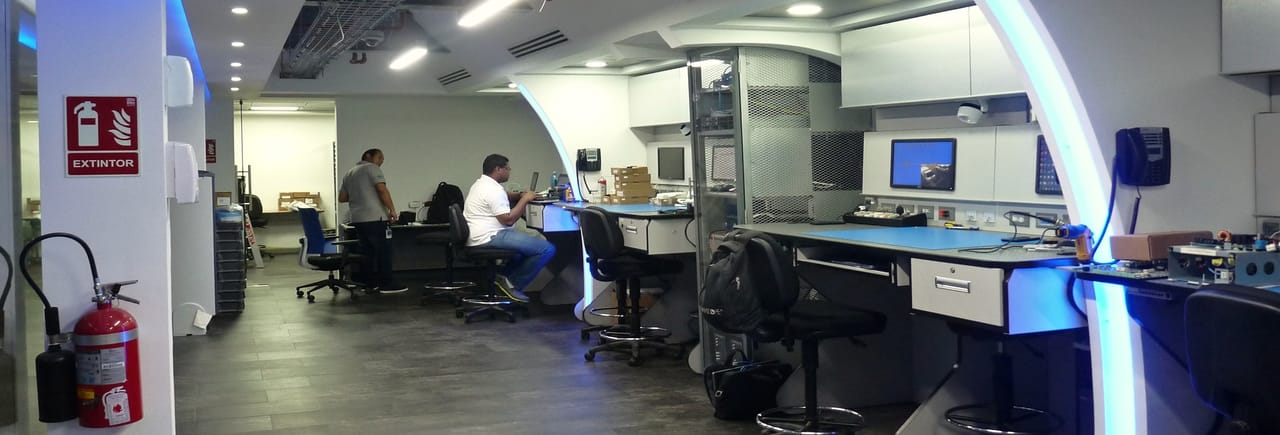 Monitoring 24/7
A center that receives the alarms from your sensors and critical equipment and has an operator handle them, day and night.
Facilities where cooling, water, power or a piece of equipment cannot fail without someone finding out.
Handling under your signed protocol, a call to the person in charge and a record of every step with its time.
What it includes
You choose what to watch and within which range. Everything is handled from the same center, under the protocol we sign together.
The temperature of your rooms and cooling equipment, watched within the range you set.
Water, fluids and gases, and the environmental conditions of your site, based on the sensors installed.
The status of your UPS units, your generators and your critical power distribution.
Solar systems, battery energy storage (BESS), charging stations and substations.
The technical alarms of your IT equipment, escalated to the right person under your protocol.
The technical alarms of your building services and your special systems.
Irrigation and the weather data that matter to your farming operation.
How it works
This is how the center handles a reading that goes out of range. Whom we call, and in what order, is set by your signed protocol.
Illustrative example
The center in numbers
The center has a UPS (backup batteries), a generator and two internet and telephony links from different providers, with operators on every shift.
Who does what
Measuring, watching, calling and repairing are different commitments. Here is each one.
Who it is for
Frequently asked questions
The center receives it as an alarm and an operator handles it: follows the protocol you signed, contacts the person in charge and records every step with its time. You receive the report.
You do. The range for each reading and the people to contact go into the agreed protocol, which sets how to verify the event, whom to contact and when to notify.
It depends on what you already have. The evaluation checks whether your equipment can send its readings or alarms to the center. Sensors are not included unless contracted.
Repairs are not included unless contracted. The center coordinates the correction of a fault with whoever your protocol names.
The center receives signals by telephone, cellular, IP (internet) and radio. Which ones your site uses is defined in the evaluation, based on your equipment and your connection.
It depends on the site, the equipment and the protocol. The proposal comes from the evaluation of your site, which has no cost, and we deliver it to you in writing.
We evaluate your site at no cost, check which equipment can be watched and give you a written proposal with the protocol you need.
Sales and inquiries(507) 209-5151Other services from the center