Intrusion and holdup
Intrusion alarms and panic, holdup and duress signals.
Service 01 · Alarms and security events
We verify it, notify under your protocol and report back. Our own operators in the monitoring center at the ATG Building, every day of the year.
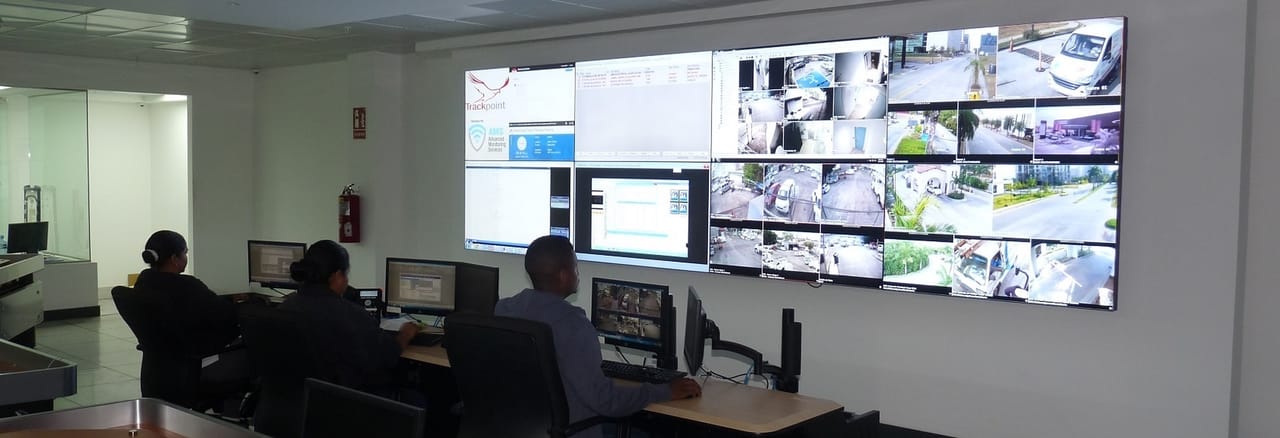 AMS monitoring center · 24/7
A monitoring center that receives the signals from your alarm and has an operator handle them, day and night.
Homes, shops, companies, banks and public entities in Panama, and monitoring centers that need backup.
Handling under your signed protocol, notice to your contacts and a record of every step with its time.
What’s included
You choose what your site needs. Every service is handled from the same monitoring center, under the protocol we sign together.
Intrusion alarms and panic, holdup and duress signals.
Fire alarm signals, system supervisory and trouble signals, and hazardous gas signals.
Perimeter intrusion and supervision of the integrity of the instrumented perimeter.
We supervise authorized openings and closings and handle schedule exceptions.
ATMs and ATM enclosures, vaults and restricted areas, and the general areas of each branch.
Wholesale signal reception or full operation of your company’s accounts, also under your own brand (white label).
Operators dedicated to a portfolio, or operational backup for another monitoring center.
How it works
This is how the monitoring center handles an alarm. The exact order of calls and notices is the one in your signed protocol.
Illustrative example
The monitoring center in figures
The monitoring center has a UPS (backup batteries), a generator and two internet and telephony links from different providers, with operators on every shift.
Who does what
Receiving a signal, notifying, travelling to the site and restoring service are separate commitments. Here is each one.
Who it’s for
Frequently asked questions
The signal reaches the monitoring center and an operator handles it: checks the account and the information available, acts under the protocol you signed (whom to call and in what order) and records every step with its time. You receive the report.
Our target operator response time to an alarm is under 60 seconds. It is a target of the monitoring center, not a guarantee, and it does not include anyone travelling to the site.
The monitoring center receives signals by telephone, cellular, IP (internet) and radio. Which ones your site uses is defined in the evaluation, based on your equipment and your connection.
Yes. We handle fire alarm signals, system supervisory and trouble signals, and hazardous gas signals, under the protocol agreed for your site.
It depends on the site, the equipment and the protocol. The proposal comes from the evaluation of your site, which is free of charge, and we deliver it to you in writing.
Yes. We offer wholesale signal reception, operation under your brand, operators dedicated to a portfolio and operational backup for another monitoring center. The terms are agreed in writing.
We evaluate your site at no cost, review your system and deliver a written proposal with the protocol and the signal paths you need.
Sales and inquiries(507) 209-5151Other services from the monitoring center